


The Unconditional Love of a Mother: A Polar Bear’s Protective Embrace
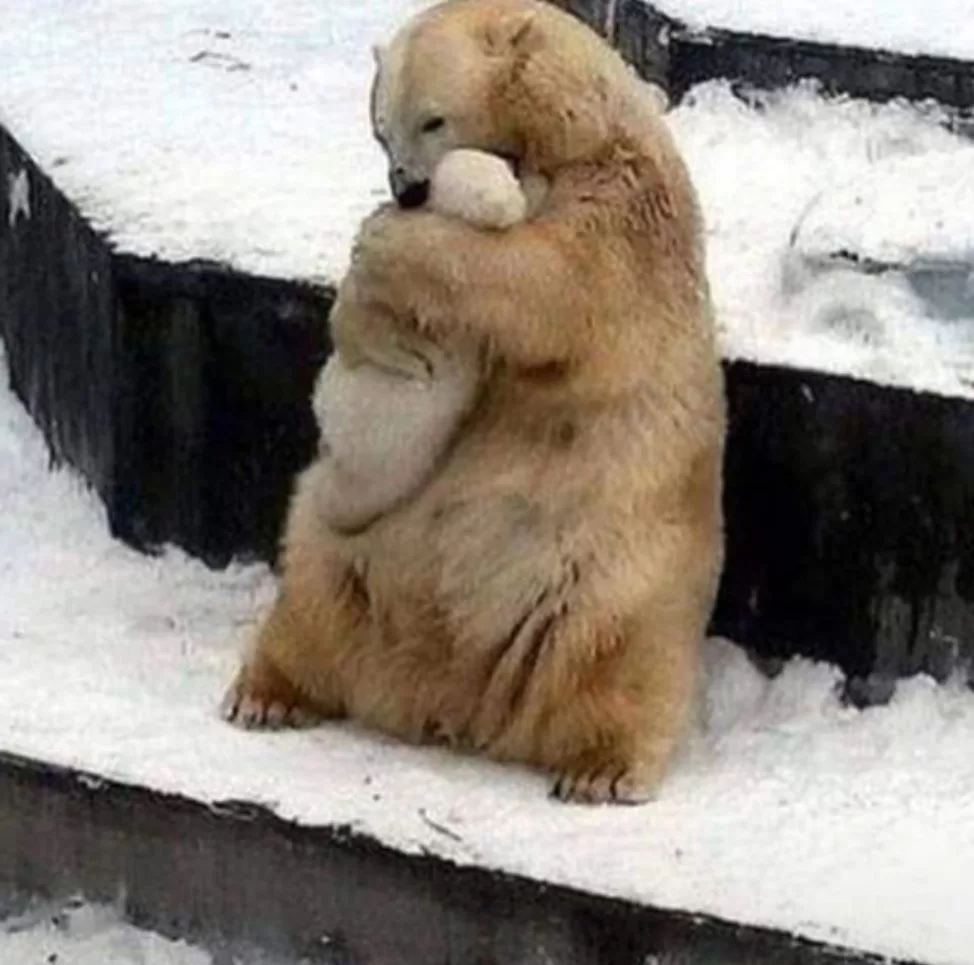
The image shows a polar bear mother standing upright in the snow, her powerful body curved protectively around her small cub. The cub is pressed tightly against her chest, hidden in her thick fur, shielded from the cold and from the world beyond. Even in the harshest environment on Earth, there is a moment of quiet tenderness.
The phrase says it clearly: “Die einzige bedingungslose Liebe ist die Liebe einer Mutter!”
Whether spoken about humans or animals, the idea of unconditional maternal love resonates deeply. A mother’s instinct to protect and nurture is one of the strongest forces in nature. It transcends species, climate, and circumstance.
In the Arctic, survival is never guaranteed. Temperatures can plummet far below freezing. Food is scarce and unpredictable. For polar bear cubs, the first months of life are especially vulnerable. They rely entirely on their mother for warmth, nourishment, and protection. Without her constant presence, their chances of survival would be minimal.
A mother polar bear carries her cub through the most unforgiving conditions. She shields it from icy winds. She leads it across vast stretches of frozen terrain in search of food. When danger approaches, she becomes both barrier and defense.
This protective posture, captured in the image, reflects more than a physical embrace. It represents devotion that does not hesitate. The cub does not question whether it is safe. It rests because it trusts.
Maternal love in the animal kingdom is driven by instinct, but that does not make it any less profound. It is immediate and unwavering. A mother does not measure what she gives. She does not calculate effort. She responds because the bond demands it.
In humans, the concept of unconditional love often centers on mothers as well. From infancy through adulthood, many people associate maternal presence with security and comfort. It is the person who wakes at night without complaint, who worries without pause, who stands as both refuge and strength.
The polar bear mother embodies this universal theme. Despite her immense size and power, her stance around the cub is gentle. Her body becomes a wall against the cold. Her warmth becomes the cub’s shelter.
Nature frequently reminds us that tenderness and strength are not opposites. In fact, they coexist. The same creature capable of immense force is also capable of extraordinary care.
The message beneath the image invites reflection. Unconditional love is not about perfection. It is about constancy. It remains present in storms. It persists when resources are limited. It does not retreat when circumstances grow harsh.
For the polar bear cub, that embrace is life itself.
And for anyone who has experienced maternal protection, whether from a human mother or witnessed in the wild, the image feels familiar. It speaks without words. It does not require explanation.
Across cultures and species, motherhood represents sacrifice, vigilance, and a willingness to place another’s needs above one’s own. It is a quiet strength that shapes survival and shapes hearts.
In the frozen landscape of the Arctic, beneath layers of snow and wind, the most powerful warmth comes from that simple, protective hold.
A reminder that unconditional love, in its purest form, is steady, fierce, and enduring.


