

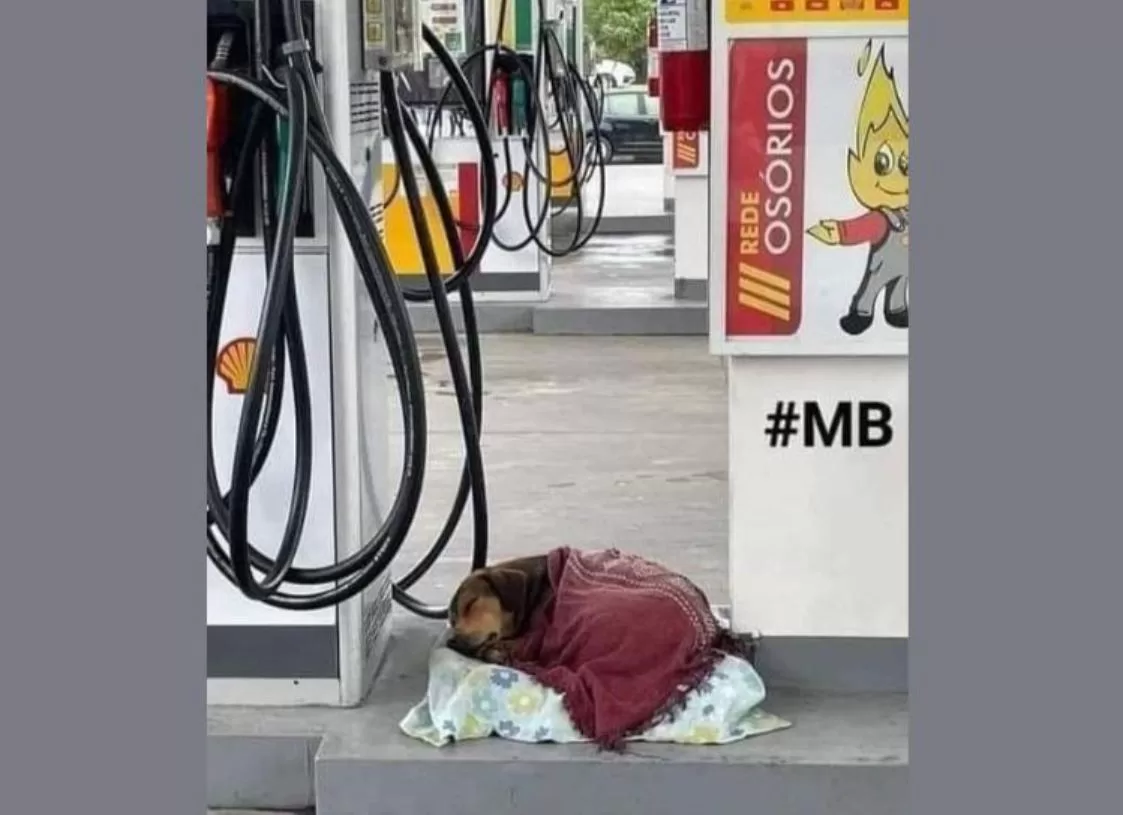

Stray Dog Finds Temporary Home at Gas Station While Waiting for a Family
At night, when the gas station settles into silence and only the soft clicking of the fuel pumps breaks the stillness, a small stray dog curls up to sleep.
Someone placed an old pillow on the ground. A blanket rests over his thin body. To most customers, this corner is nothing more than a patch of concrete beside a pump. To him, it has become something far more important. It is the only place where he feels protected from the rain, shielded from the wind, and close enough to people who sometimes leave him food and a few gentle words.
The environment is far from ideal. The scent of gasoline lingers in the air. Headlights flash past during the day. Engines roar, doors slam, footsteps echo against the pavement. Yet in the middle of this constant movement, the dog has found a fragile sense of routine.
Stray animals often gravitate toward places where human presence offers a degree of safety. Gas stations, markets, and shop entrances become informal shelters because they provide light, partial cover, and occasional kindness. For this small dog, the corner by the fuel pump is not just shelter from the elements. It is stability in an otherwise uncertain life.
During the day, he watches cars come and go. Some drivers glance at him briefly before walking inside to pay. A few pause. Some leave scraps of food or refill a small bowl of water. A handful kneel down to pet him, offering the contact he quietly craves. These gestures, though small, create a rhythm he can depend on.
At night, when traffic slows and the station grows quiet, he rests.
The old pillow beneath him softens the hard concrete. The blanket, likely placed there by a compassionate employee or regular visitor, keeps his fragile body warm. He sleeps lightly, alert to unfamiliar sounds. Stray dogs rarely sleep deeply. Survival requires awareness.
Yet even in this improvised shelter, there is something like peace.
He owns nothing. No collar. No bed. No fenced yard. No name that everyone calls consistently. But he holds onto something far stronger than possessions.
Hope.
Hope that one day, someone will not just stop to refill their tank but to notice him fully. Hope that one pair of headlights will slow down for a different reason. Hope that the door of a car will open not for a brief visit, but for a permanent invitation.
Many stray animals wait in similar places across cities and small towns. They become part of the background, familiar yet overlooked. People recognize them, perhaps even feel affection for them, but daily life moves quickly. It is easy to assume that someone else will step in.
For this dog, the gas station corner is temporary, even if he does not know it. It represents a pause in hardship, not the end of it. While the concrete provides dryness and the blanket provides warmth, what he truly needs is belonging.
The contrast is striking. Surrounded by fuel pumps designed to keep vehicles moving, he remains still. Cars travel long distances, but he stays in the same place, day after day. Movement happens all around him, yet his life waits for a single, decisive change.
Stories like his remind us that home is not defined by walls or ownership. For him, home is where he feels least threatened. Where someone remembers to bring food. Where a blanket means someone cared enough to return.
Between the smell of gasoline and the glare of passing headlights lies a small dog who asks for very little. Just safety. Just warmth. Just a chance.
And every night, as the station quiets and the world slows, he rests in his corner, holding onto the possibility that tomorrow might be the day someone takes him from that patch of concrete and into a life that finally feels permanent.


