

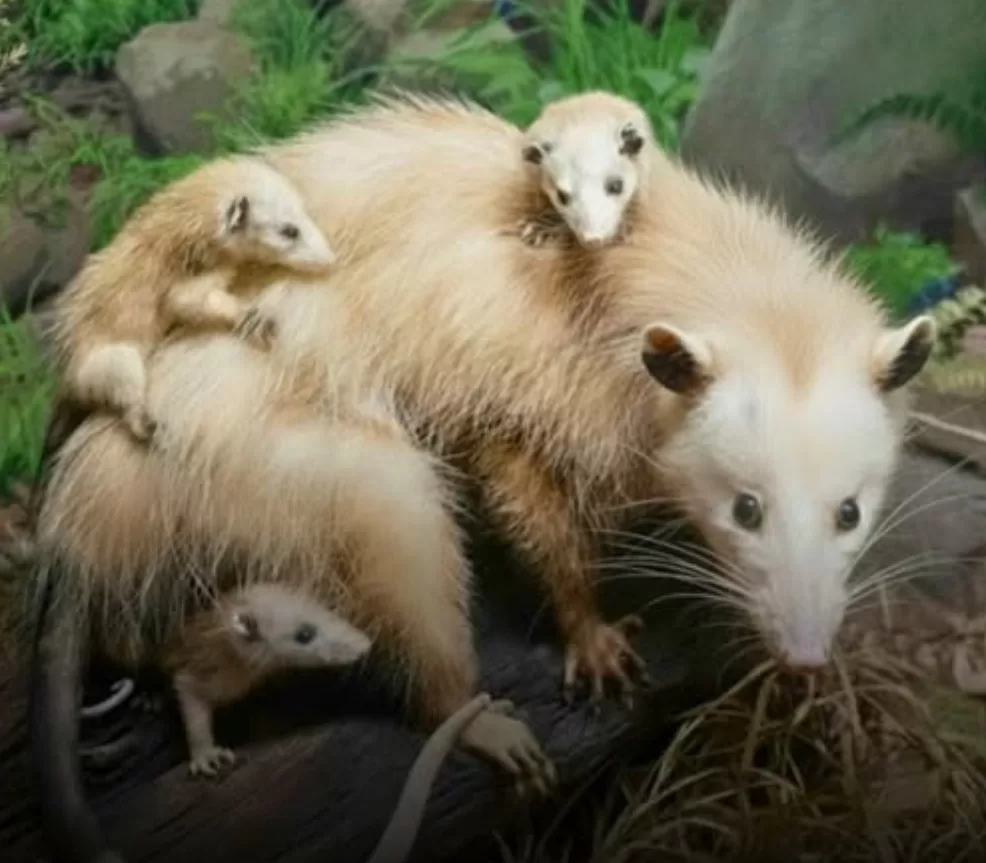

Opossums: Nature’s Quiet Superheroes Fighting Ticks and Venom
At first glance, opossums do not appear remarkable. With their coarse fur, long tails, and slow, cautious movements, they are often overlooked or misunderstood. Yet beneath their modest appearance lies a remarkable set of abilities that make them unsung guardians of the environment.
The opossum is a surprisingly resilient survivor. One of its most fascinating traits is its high resistance to certain snake venoms. While not entirely immune to every species, opossums can withstand doses that would seriously harm many other animals. This resilience has drawn scientific attention, as researchers study compounds in their blood that may help develop improved treatments for snakebites in humans.
Their biological defenses do not stop there.
Opossums are also notably resistant to rabies compared to many other mammals. Their relatively low body temperature makes it difficult for the virus to thrive, reducing the likelihood of infection. Although they are not completely incapable of carrying disease, cases of rabies in opossums are rare.
Beyond their physiological strengths, opossums provide significant ecological benefits.
They are natural pest controllers. As nocturnal foragers, they roam forests, gardens, and suburban areas in search of food. Their diet includes ticks, slugs, snails, and various insects that can otherwise become problematic. By consuming large numbers of ticks, opossums contribute to reducing the spread of tick-borne illnesses. In this sense, they function as an organic pest management team, working silently while most people sleep.
Their appetite for other small pests also benefits gardeners and farmers. By feeding on insects and small invertebrates, they help maintain balance within local ecosystems. Rather than damaging crops, opossums often assist by controlling species that might otherwise cause harm.
Despite these contributions, opossums are frequently misunderstood.
Their defensive behavior of playing dead, known as “playing possum,” is often mistaken for passivity or weakness. In reality, it is a highly effective survival strategy. When threatened, an opossum may enter an involuntary state that mimics death, complete with reduced heart rate and a faint odor. This response can deter predators that prefer live prey.
Their quiet and solitary nature means they rarely seek attention. Unlike more charismatic wildlife, they do not inspire widespread admiration. Yet their ecological role is substantial.
Researchers continue to explore the potential medical applications of opossum venom resistance. Understanding how their bodies neutralize certain toxins may open doors to new treatments for snakebite victims, particularly in regions where access to antivenom is limited.
In addition to their scientific value, opossums represent the importance of biodiversity. Every species plays a role in maintaining environmental health. Opossums help regulate pest populations, reduce parasite transmission, and contribute to the intricate web of interactions that sustain ecosystems.
Their presence in urban and suburban areas also demonstrates adaptability. Opossums can survive in a range of environments, from dense forests to city neighborhoods. This flexibility has allowed them to coexist with human populations, often without people realizing how beneficial they are.
They are not flashy or loud. They do not demand recognition. Yet night after night, they perform essential ecological tasks without applause.
In a world where attention often goes to the most visible or dramatic species, opossums quietly fulfill their function. They remind us that heroism in nature does not require spectacle. Sometimes, it simply requires persistence and purpose.
Misunderstood by many and appreciated by few, these marsupials prove that true environmental champions do not need to be celebrated to make a meaningful impact.


