

Karma, a cow rescued from a life of hardship, found herself in a sanctuary in California, but despite her newfound safety, she couldn’t stop crying. Her constant cries raised concerns among her rescuers, who noticed that Karma’s udder was full of milk. This indicated that she had recently given birth, although they hadn’t been told about any calf when they took her in. The mystery of her missing baby began to unravel, and her rescuers set out to find out where her calf had gone.
After some investigation, they uncovered the grim truth: Karma’s calf had been separated from her and was on its way to a slaughterhouse. The calf had been loaded onto a truck, its future bleak and uncertain. But in a stroke of unexpected fortune, the truck carrying the calf broke down, giving the rescuers just enough time to intervene and retrieve the baby.
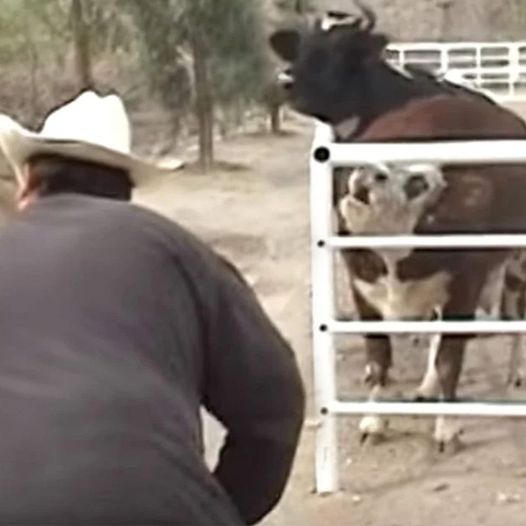
When Karma saw her calf again through the fence, her reaction was immediate and emotional. The powerful moment of their reunion showed that the bond between mother and calf was just as profound as any human relationship. Karma rushed towards the fence, her cries turning into a mix of relief and joy as she recognized her baby.
This heartwarming moment is a testament to the emotional depth animals are capable of. It also raises important questions about how animals are treated in the farming industry. For many, it is easy to forget that farm animals like cows have rich emotional lives. Karma’s response to being reunited with her calf reminds us that they, too, experience loss, love, and grief.
The Reality of Industrial Farming
Karma’s story is not unique. In industrial farming, cows are often separated from their calves just a few days after giving birth so that their milk can be harvested for human consumption. This practice is common in the dairy industry, where cows are viewed as producers rather than sentient beings with emotions. The separation is traumatic for both the mother and the calf, leading to stress and depression, as was evident in Karma’s case.
In many industrial farming systems, animals are treated as commodities. The well-being of cows, pigs, chickens, and other livestock is frequently sacrificed in favor of profit. Animals are often subjected to cramped conditions, deprived of their natural behaviors, and exposed to extreme physical and emotional stress.
The case of Karma and her calf highlights the need for more humane practices in farming. Many animal rights activists and organizations like Gentle Barn work tirelessly to bring attention to these issues and advocate for changes in how animals are treated on farms.
The Role of Sanctuaries Like Gentle Barn
Sanctuaries such as Gentle Barn play a crucial role in providing a safe haven for animals rescued from abusive or neglectful situations. They also serve as educational centers where the public can learn about the emotional lives of animals and the importance of compassion towards them. Karma’s story is one of many examples where animals rescued from the industrial farming system are given a second chance at life.
By telling stories like Karma’s, these organizations hope to shift public perceptions about farm animals and encourage more humane treatment across the agricultural industry. Compassionate farming practices, which prioritize animal welfare, can reduce the suffering that many animals endure.
Taking Action for Animal Welfare
The story of Karma and her calf invites us to think about what actions we can take to improve the lives of animals. For some, this might mean supporting organizations like Gentle Barn or advocating for stricter regulations on animal welfare in farming. Others may choose to adopt plant-based diets or reduce their consumption of animal products to avoid contributing to the systems that perpetuate this suffering.
While not everyone will take the same approach, Karma’s emotional reunion with her calf reminds us of the importance of empathy in our interactions with animals. Whether it’s in small daily choices or larger advocacy efforts, each person can contribute to a more humane world for animals.
A Mother’s Love Knows No Boundaries
Karma’s reunion with her calf was more than just a moment of relief; it was a powerful reminder of the resilience of animals and the deep emotional connections they share. It also highlighted that a mother’s love knows no boundaries, whether human or animal. This moving story not only touched the hearts of those who witnessed it but also serves as a reminder of the profound value of all living creatures.
For anyone moved by Karma’s tale, spreading awareness about the plight of animals in industrial farming systems can help spark meaningful change. Sharing stories like this one can encourage others to think more deeply about the welfare of animals and take steps to support a more compassionate world.