

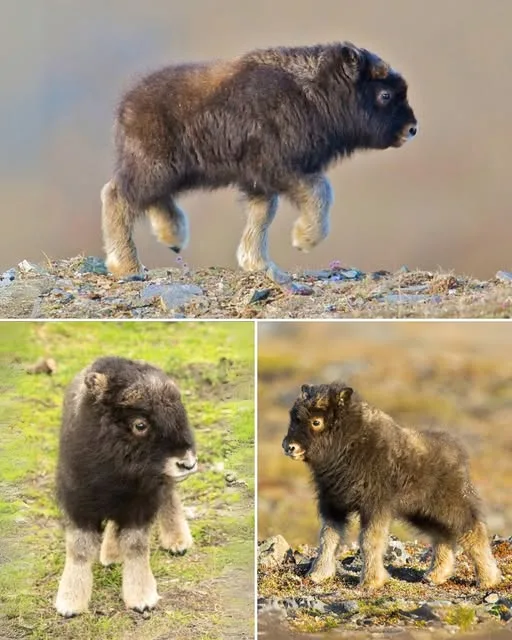

Introduction: Tiny but Tough
In the frozen landscapes of the Arctic, survival is a battle against wind, ice, and predators. Yet amid this harsh environment, there exists a creature so fluffy, so endearing, that it seems almost out of place—a musk-ox calf.
With its soft wool coat, wide eyes, and sturdy little frame, this calf is more than just adorable. It’s a living warrior, uniquely adapted to one of the coldest places on Earth. Native to North America and Greenland, musk-oxen are ancient animals that have roamed the tundra since the Ice Age. Today, they remain a powerful symbol of Arctic resilience.
A Coat Like No Other
What makes musk-ox calves instantly memorable is their incredible coat. From the moment they’re born, they’re wrapped in a blanket of wool designed to withstand temperatures that would freeze most other creatures.
- Qiviut — Nature’s Miracle Fiber: Beneath their outer guard hairs lies a dense underwool called qiviut. This fiber is considered one of the warmest natural materials in the world, up to eight times warmer than sheep’s wool.
- Lightweight but Strong: Despite its warmth, qiviut is surprisingly light, making it the ultimate insulation against Arctic cold.
- Human Use: Indigenous communities have long prized qiviut for its quality. Scarves, hats, and garments made from qiviut are among the softest and most luxurious cold-weather items in existence.
For a calf, this coat is more than cute fluff—it’s the armor that keeps it alive.
Life in the Herd
Musk-oxen are not solitary animals. Instead, they thrive through the strength of the herd. Calves are born into tightly knit groups where cooperation means survival.
- Defensive Circles: When predators like wolves or bears approach, adults form a protective ring around the calves. Horns outward, bodies locked together, they create an impenetrable wall of muscle and wool. The calves remain safe in the middle until the threat passes.
- Teaching by Example: From a young age, calves observe and learn from older members—how to graze, move through snow, and conserve energy in freezing conditions.
- Social Bonds: Musk-oxen maintain strong bonds, often staying with their birth herds for years. These connections are essential for surviving long Arctic winters.
For a calf, growing up in such a community ensures not only protection but also the knowledge needed to thrive in the tundra.
Ancient Survivors
Musk-oxen are often called “Ice Age relics.” They once roamed alongside mammoths and saber-toothed cats, surviving drastic climate changes that wiped out many other species.
That resilience is written into their DNA. Their compact bodies, thick coats, and communal behaviors have allowed them to endure for thousands of years. For the musk-ox calf, every snowy step is part of a legacy stretching back to the Pleistocene era.
The Fluffy Warrior’s Diet
Despite their size, musk-oxen are herbivores. Calves begin by nursing but soon transition to grazing on Arctic vegetation.
- Summer Feeding: They eat grasses, mosses, and flowering plants during the short but abundant Arctic summer.
- Winter Struggles: In colder months, they use their hooves to scrape away snow and find lichen or frozen grasses beneath.
For calves, learning to forage is critical. Each bite helps them build the strength needed to survive their first brutal winter.
Threats to Musk-Oxen
While musk-oxen have survived since the Ice Age, modern challenges still threaten them.
- Predators: Wolves remain their primary natural threat, especially to calves that stray from the herd.
- Climate Change: Rising Arctic temperatures alter vegetation patterns and increase stress on populations.
- Human Activity: Hunting and habitat disruption once drove musk-oxen to near extinction in some regions, though conservation programs have helped them recover.
The musk-ox calf, while fluffy and adorable, represents a species that walks a fine line between survival and vulnerability.
Fun Facts About Musk-Ox Calves
- Speedy Growth: Calves are able to run within hours of birth, a vital adaptation for escaping predators.
- Born in Spring: Most calves arrive between April and June, when conditions are less severe and food is more plentiful.
- Fluffy but Fierce: Don’t be fooled by their appearance—these calves grow into powerful animals capable of withstanding Arctic blizzards.
- Qiviut Value: Each year, musk-oxen naturally shed qiviut, which is collected without harming the animals.
Why We Love Them
There’s something universally heartwarming about musk-ox calves. They embody contrasts—delicate yet strong, vulnerable yet fiercely protected, ancient yet very much alive in today’s world. Their fluffy coats and wide-eyed innocence make them instantly lovable, while their survival story commands respect.
In many ways, they are reminders of resilience: proof that even in the harshest environments, life not only persists—it thrives.
Conclusion: The Arctic’s Fluffiest Fighter
The musk-ox calf may look like a cuddly ball of wool, but it is, in truth, one of nature’s most extraordinary survivors. From its miraculous qiviut coat to the protective herd that surrounds it, every detail of its life is designed for endurance.
As climate change reshapes the Arctic, the survival of these calves becomes a symbol of something larger: the resilience of wildlife, the balance of ecosystems, and the delicate beauty of creatures that seem almost too magical to be real.
So the next time you see a picture of a musk-ox calf, don’t just smile at its fluffiness. Remember that beneath that wool beats the heart of a warrior—small, determined, and carrying the legacy of the Ice Age into the future.


