


The True Story Behind One of the World’s Most Enduring Bonds
The story begins in Ōdate, a quiet town in Japan, far from the crowds and movement that would later define this tale. There, a professor from Tokyo named Hidesaburō Ueno took in an Akita puppy. The dog was named Hachi, a simple name that would later evolve into the affectionate Hachikō.

From the start, a routine formed between the two that felt unremarkable at first. Each morning, Hachikō walked with his human to the train station. Each afternoon, he returned to the same place to wait. The station was Shibuya Station, a busy hub even in the early twentieth century. For Hachikō, it was not a place of crowds or schedules. It was simply where his person came back.
Day after day, the pattern repeated with quiet precision. Hachikō arrived on time, stood patiently, and greeted his human when the train doors opened. This ritual was not trained or enforced. It was chosen. It became part of how the dog understood the world.
On May 21, 1925, that world changed.

Professor Ueno suffered a sudden cerebral hemorrhage at work and died. He never returned home. Hachikō did not know this. He only knew that the afternoon train arrived and the familiar figure did not step onto the platform.
So he waited.

The next day, he returned again. And the day after that. And the one after that.
For nearly ten years, Hachikō came back to the same spot at Shibuya Station. He waited at the same time, as if his hope followed a timetable that no longer existed. To him, the routine was not broken. The world had simply been delayed.
At first, commuters noticed the dog as a quiet presence. Over time, his consistency drew attention. People began to recognize him. Station workers fed him. Passersby stopped to pet him. They learned his story and shared it. Slowly, Hachikō became more than a dog waiting for someone who would never return. He became a symbol.
In Japan, loyalty has deep cultural meaning. Hachikō’s devotion resonated far beyond the station. Newspapers wrote about him. Children were told his story. He came to represent faithfulness without conditions and love without deadlines.
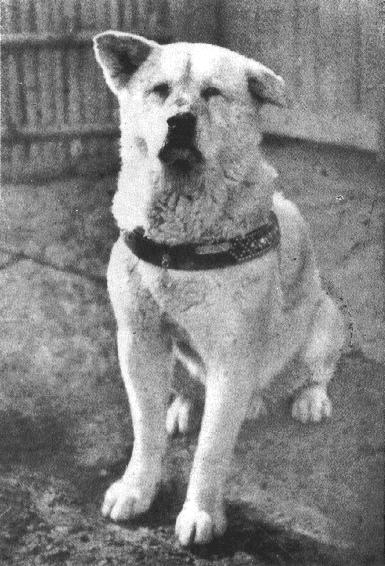
When Hachikō died in 1935, the country mourned.
His body was found not far from the station he had never stopped visiting. The grief was not limited to those who had known him personally. It was collective. People felt they had lost something rare and pure. A reminder of what it means to remain loyal even when there is no reward.
Today, a bronze statue of Hachikō stands outside Shibuya Station, one of the busiest places in the world. People meet there. Tourists take photos. Commuters pass by without always stopping. Yet the meaning of the statue remains unchanged. It marks the place where waiting became an act of love rather than obligation.
Hachikō’s grave lies near that of his human, completing in death what could not be completed in life.
Decades later, the story reached new audiences through film. It was adapted in Japan and later introduced to a global public through Hachi: A Dog’s Tale, starring Richard Gere. While the details vary depending on the version, the heart of the story remains the same. A dog waits. Not because he is commanded to. Not because he expects praise. But because love taught him that this is what you do.
What makes Hachikō’s story endure is not the length of time he waited, although that alone is extraordinary. It is the purity of his intention. There was no bitterness in his return to the station. No visible confusion or anger. Just presence. Just faith.
In a world that often measures relationships by utility or outcome, Hachikō stands as a quiet contradiction. He reminds us that connection does not always seek closure. Sometimes, it exists simply because it once did.
People often ask whether animals truly understand loss. Hachikō never spoke, never explained, never narrated his pain. But his actions tell a story that words cannot improve. He returned to the same place because that place held meaning. Because love does not disappear when the person you love does.
That is why his story continues to matter.
It is not about nostalgia or sentimentality. It is about recognizing that bonds can be deeper than reason. That loyalty can persist without reinforcement. That waiting can be an expression of love, not weakness.
Hachikō did not become a legend because he was famous.
He became a legend because he was faithful.
And even now, standing in bronze amid the rush of modern Tokyo, he asks a quiet question of everyone who passes by. How deeply are we willing to love. And how long are we willing to remember.


