

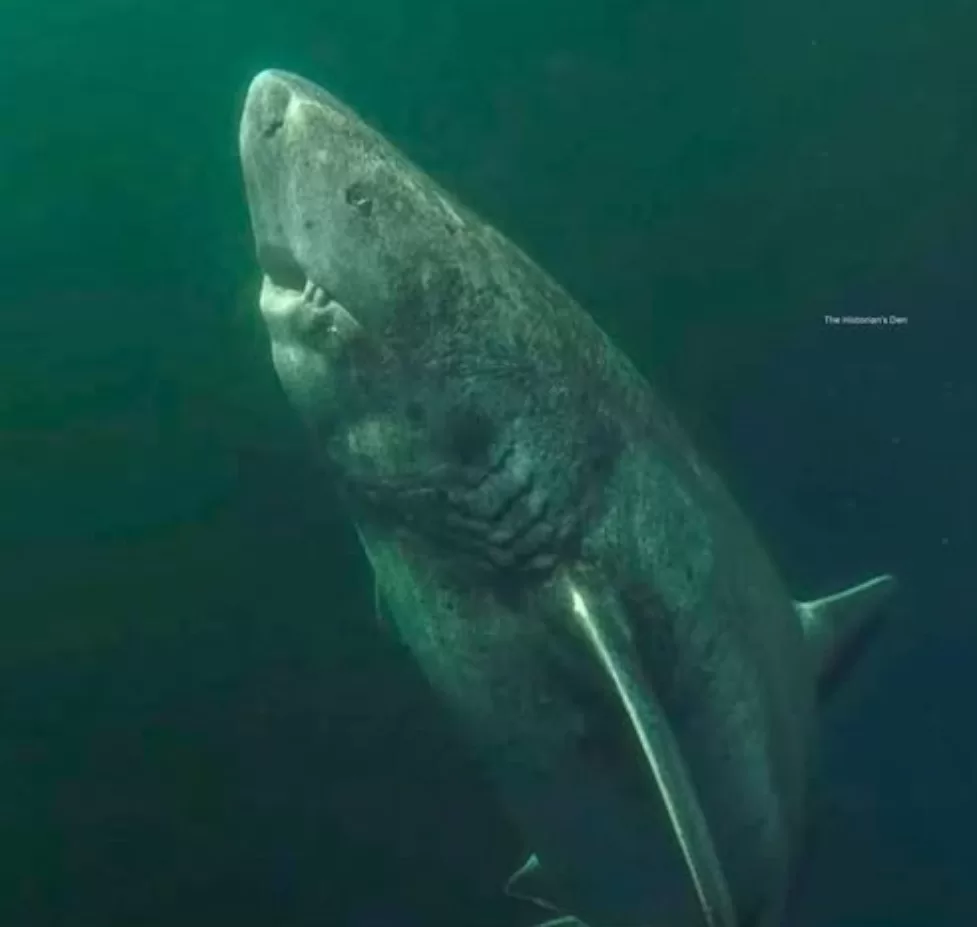

Greenland Sharks May Live Up to 500 Years, Making Them the Longest-Living Vertebrates
Greenland sharks are often described as the Methuselahs of the sea. These quiet inhabitants of Arctic deep waters grow at an extraordinarily slow pace, adding only about one centimeter per year. That unhurried growth is closely linked to their astonishing lifespan.
Researchers estimate that Greenland sharks live at least 250 years. Some individuals may even reach 400 to 500 years of age. One particularly well-studied specimen was estimated to be around 392 years old. Scientists determined this age by analyzing protein layers in the shark’s eye lens, a method that allows them to approximate when the animal was born. Based on current knowledge, Greenland sharks are considered the longest-living vertebrates known to science.
To put that into perspective, imagine a shark born around 1627. It would have already been swimming through Arctic waters when Shakespeare’s plays were still being performed in London. It would have existed at the time Galileo defended his astronomical views before the Inquisition. It would have been alive when the Mayflower transported settlers to North America. While human history unfolded in dramatic chapters at the surface, that same shark could have been moving silently beneath Arctic ice.
Greenland sharks inhabit the cold, deep waters of the North Atlantic and Arctic Oceans. Temperatures in these regions remain near freezing year-round. The extreme cold plays a significant role in shaping the shark’s biology. Low temperatures slow metabolic processes, reducing energy consumption and contributing to their gradual growth and long lifespan.
Their lifestyle is defined by patience.
Greenland sharks do not rush. They mature extremely late compared to most animals. Scientists believe they reach sexual maturity only after more than 100 years. In biological terms, this is exceptional. Most vertebrates reproduce far earlier in their lifespan. This delayed maturity means population recovery can be slow if numbers decline, making conservation efforts particularly important.
Their slow metabolism and preference for deep, cold habitats allow them to conserve energy efficiently. Rather than rapid bursts of speed, they move steadily and deliberately through the water. This low-energy existence appears to be one of the keys to their longevity.
The method used to estimate their age has drawn particular scientific interest. By examining the proteins in the eye lens, researchers can analyze carbon isotopes that provide clues about when the shark was born. Since the eye lens tissue does not regenerate or change significantly over time, it preserves a biological record from early life stages. This technique has helped scientists confirm that these sharks can survive for centuries.
As a result, Greenland sharks are often described as living time capsules of the ocean.
They have witnessed shifts in climate, changes in marine ecosystems, and the expansion of human activity across the North Atlantic. While industrialization transformed coastlines and shipping routes expanded, these sharks continued their slow, steady existence far below the surface.
Their extraordinary lifespan also raises questions about aging in vertebrates. Understanding how Greenland sharks maintain biological function for centuries may offer insights into longevity and cellular stability. Although research is ongoing, their slow metabolism and stable, cold environment appear to be major factors.
Despite their resilience, Greenland sharks are not immune to human impact. Bycatch in deep-sea fisheries and changing ocean conditions can affect their populations. Given their late maturity and slow reproduction, any significant decline could take generations to reverse.
For now, they remain among the most remarkable creatures in the marine world. In a fast-paced human society, the Greenland shark represents the opposite approach to life. It grows slowly, matures slowly, and moves slowly, yet endures for centuries.
While civilizations rise and fall above the ocean’s surface, these ancient sharks continue their quiet paths beneath Arctic waters. They remind us that longevity in nature often comes not from speed or strength, but from patience and balance.
In the cold depths of the North Atlantic, time flows differently. And the Greenland shark, swimming through centuries, embodies that difference like no other vertebrate on Earth.


