


Christian the Lion: The True Story of John Rendall, Ace Bourke, and an Unforgettable Reunion
In 1969, two young Australians, John Rendall and Anthony “Ace” Bourke, walked into a London department store and encountered something astonishing. In the shop window, behind the glass, stood a lion cub for sale.
They could not simply walk past.
The cub was small, vulnerable, and clearly out of place in the middle of a city. The two friends decided to take him with them. They named him Christian.
Back in their apartment in Chelsea, Christian grew up not as a spectacle, but as a companion. He played, explored, and bonded deeply with the two men. Photographs from that time show a remarkable closeness. Christian would follow them through the neighborhood, rest beside them, and behave with surprising gentleness for a growing predator.
But lions do not stay small.
As Christian matured, his size and strength increased rapidly. It became clear that their affection alone could not provide the life he was meant to live. Keeping him confined in an urban setting would eventually become unsafe and unfair. The two men understood something essential: love is not a cage.
Determined to give Christian the freedom he deserved, they sought help from conservationist George Adamson, who was working in Kenya with lions and rehabilitation efforts. With Adamson’s guidance, they arranged for Christian to be transported to Africa.
In Kenya, Christian began the long process of adapting to life in the wild. It was not immediate. Having grown up among humans, he needed to learn how to hunt, defend territory, and interact with other lions. Gradually, he developed the instincts and behaviors required to survive independently.
Months passed. Then a year.
During that time, one question lingered in John and Ace’s minds. If they returned, would Christian recognize them? Or would he see them simply as strangers within his territory?
In 1971, they traveled back to Kenya to find out.
George Adamson cautioned them. Christian was no longer a tame cub. He was now a full-grown lion, strong and territorial. Approaching him carried risk. The men hesitated, aware of the danger, yet compelled by the bond they once shared.
Then, on the horizon, a lion appeared.
Christian paused. He seemed to assess the figures before him. For a moment, there was silence.
Then he ran.
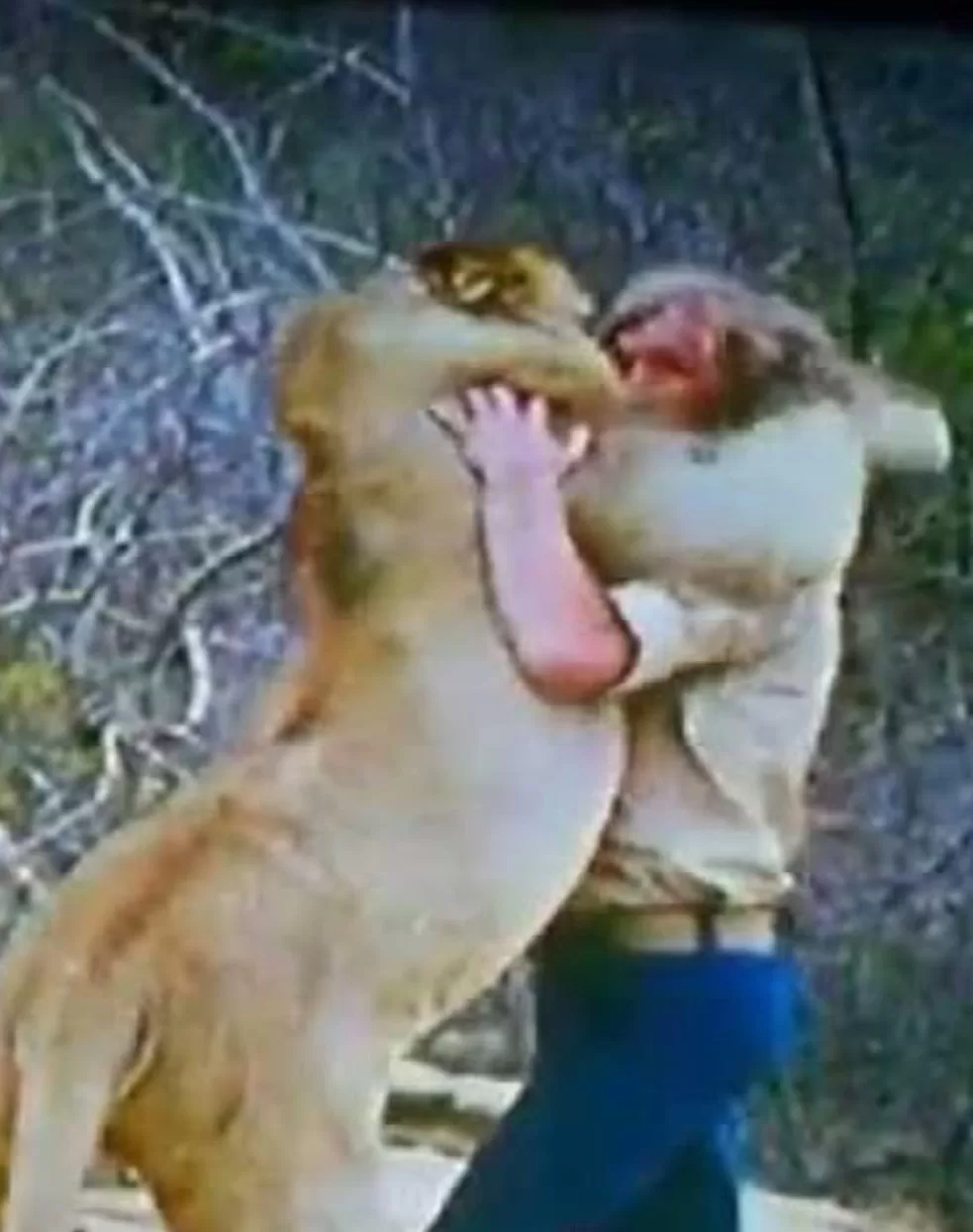
Not in aggression, but in unmistakable excitement. He leapt toward them, placing his large paws around their shoulders. He rubbed his mane against their faces and emitted low sounds of recognition. The reunion was not cautious. It was joyful.
Observers described the moment as extraordinary. Christian’s body language conveyed familiarity and trust. At one point, he even introduced them to his pride, as though acknowledging them as part of his history.
Footage of the reunion eventually spread around the world, becoming a powerful symbol of connection across species. It challenged common assumptions about wild animals as incapable of emotional memory. Christian’s response suggested something deeper: that bonds formed in early life can leave lasting impressions.
The story also carries an important message about responsibility. John and Ace did not cling to Christian for their own comfort. When they recognized that he needed a different life, they made the difficult decision to let him go. Their love was expressed not through possession, but through release.
Christian’s journey stands as a reminder that wild animals are not objects or trophies. They are sentient beings with memory, instinct, and the capacity to form attachments.
Even in the vast landscape of the African savanna, something endured. When Christian saw the men who had once cared for him, he did not respond with hostility. He responded with recognition.
His story continues to resonate because it reflects something both simple and profound: even a lion, living freely in the wild, may remember those who first showed him care.
And sometimes, that memory runs toward you instead of away.


