


The Unlikely Hero: A Cat Who Became a Hospital’s Comfort Companion
Hospitals are often places of stress, anxiety, and uncertainty. Sometimes, the smallest gestures or unexpected visitors can brighten the somber atmosphere and offer patients a moment of comfort. This is the story of a remarkable cat who appeared one day, kept coming back, and ultimately became the beloved companion of patients at a local hospital.
The Mysterious Arrival
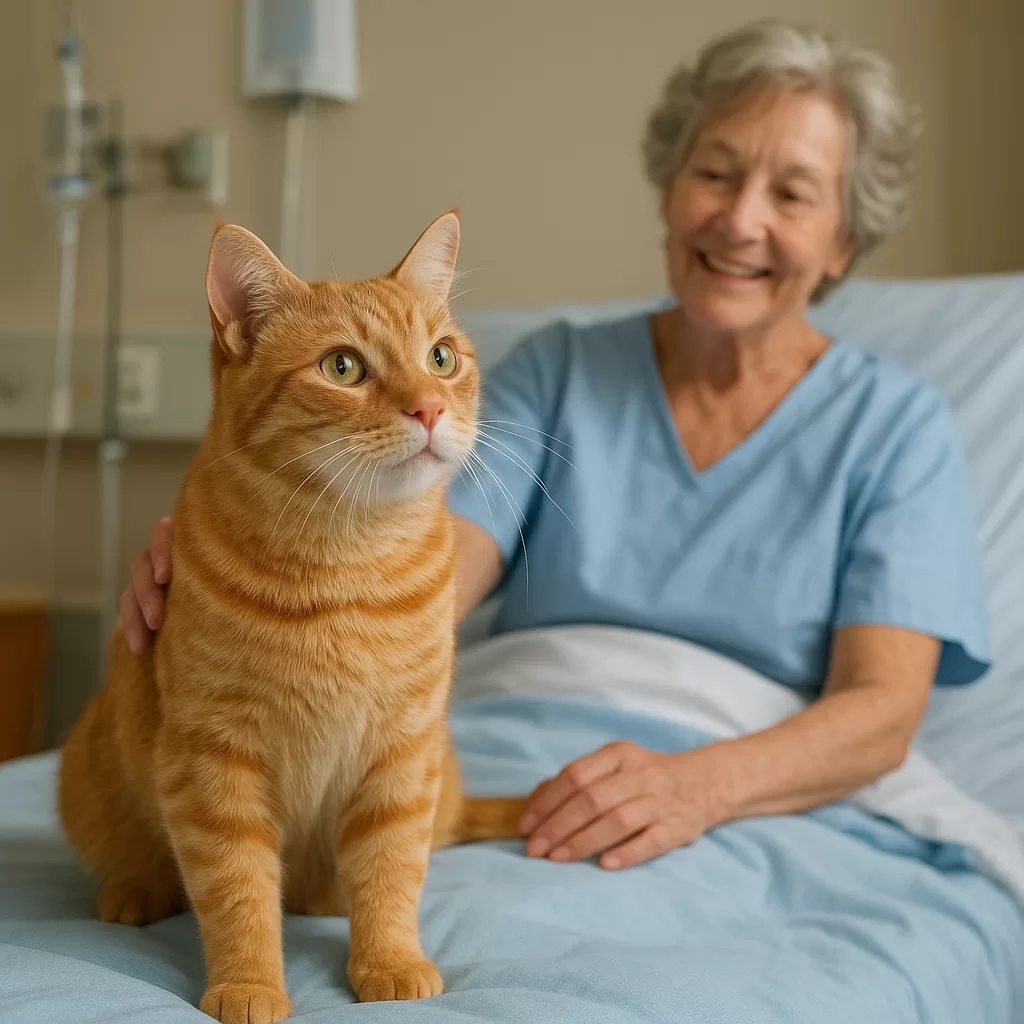
One sunny afternoon, a small tabby cat wandered into the entrance of St. Mary’s Hospital. Staff were initially puzzled and concerned. The cat seemed neither feral nor a stray; it walked calmly through the corridors and settled near the patients’ waiting areas. Despite several attempts by security to escort the cat out, the feline always found its way back inside.
Staff Resistance: Trying to Send the Cat Away
At first, hospital staff saw the cat as a nuisance and a potential hygiene risk. Maintenance teams gently removed the cat from the premises, only to find it returning the next day. Notices were posted warning visitors not to feed or encourage the cat. However, the animal showed remarkable persistence.
Nurses discreetly observed the cat from a distance, noting that it seemed to seek out patients who looked lonely or distressed. Slowly, some staff members began to warm to the idea that the cat might be more than a mere pest.
A Shift in Mood: Patients Respond to the Cat’s Presence
It didn’t take long before patients started interacting with the cat voluntarily. The gentle animal would weave between chairs, rubbing affectionately against people’s legs or curling up on laps. Several patients who were grappling with anxiety, loneliness, or pain seemed to find solace in the cat’s company.
Specific Patient Interactions
Margaret, an elderly lady recovering from surgery, was often tearful and withdrawn. One afternoon, the cat jumped onto her bed, purring softly. Margaret smiled for the first time in days and gently stroked the cat’s fur. That simple moment lifted her spirits and motivated her to engage more actively in her recovery.
Tom, a young man undergoing chemotherapy, found the cat’s presence a welcome distraction from his treatment. He even named the cat “Whiskers” and looked forward to the feline’s daily visits, which gave him hope and joy during difficult sessions.
A Touching Recovery Story
Perhaps the most heartwarming story involved Sarah, a teenage girl hospitalized for a prolonged illness. Sarah was often too weak to participate in physical therapy and was emotionally drained by her condition.
One day, Whiskers jumped onto Sarah’s bed and stayed by her side for hours. Over the next few weeks, Sarah’s mood visibly improved, and she began responding better to therapy. Her parents and doctors credited the cat’s companionship with providing emotional support that encouraged Sarah’s determination to heal.
The Hospital “Adopts” Its Unofficial Therapy Cat
As stories of Whiskers’ positive impact spread, the hospital administration made a compassionate decision. Rather than removing the cat, St. Mary’s embraced Whiskers as an unofficial therapy animal.
Staff members created a routine to care for Whiskers, providing food and a comfortable resting spot inside the building. They even installed a small identification tag on the cat’s collar identifying it as the hospital’s comfort companion.
Why Whiskers Made a Difference
Whiskers’ story highlights the profound power of animal companionship in healthcare settings. A few key reasons for the cat’s impact include:
- Emotional comfort: The simple act of petting or seeing a calm animal can reduce stress and anxiety.
- Distraction from pain: Interacting with Whiskers gave patients a break from their symptoms or medical procedures.
- Encouragement to socialize: The cat encouraged patients to engage with staff and family members more openly.
- Unconditional companionship: Whiskers offered non-judgmental presence, crucial for patients feeling isolated.
Conclusion
Whiskers the cat transformed the atmosphere at St. Mary’s Hospital, reminding everyone that healing goes beyond medicine. This real-life story shows that sometimes, comfort comes on four paws and a soft purr. Hospitals and healthcare providers can learn from Whiskers’ example, recognizing the invaluable role that animals can play in patient recovery and emotional well-being.
If you ever visit St. Mary’s, keep an eye out for a certain tabby cat who, despite arriving as an unexpected guest, has become the heartwarming symbol of hope and healing.


