

Can You Solve the Second Horse Illusion
Only the Highly Observant Spot It
Optical illusions are more than visual entertainment. They reveal how the brain filters information, decides what matters, and sometimes ignores what is right in front of us. Some illusions hide shapes. Others rely on perspective. This one plays directly with expectation.
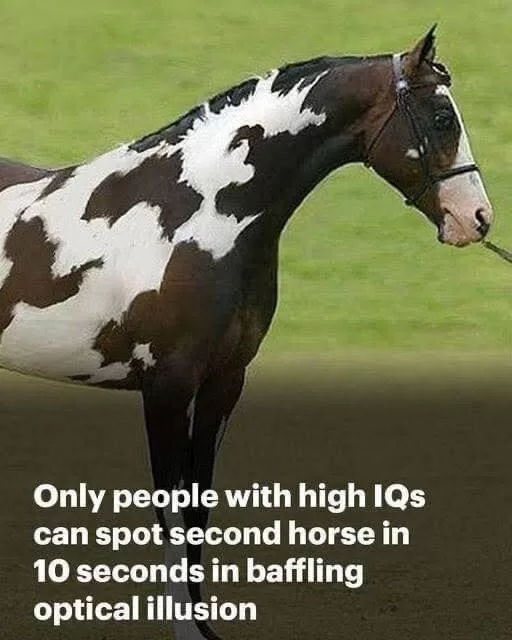
A single image of a brown and white horse has been circulating online, leaving thousands of viewers puzzled. The challenge seems simple at first.
Find the second horse.
The Puzzle That Trips Most People Up
When you first look at the image, you see a full-grown horse standing calmly, its coat patterned with natural highlights and shadows. Once you are told there is a second horse, your brain immediately starts scanning the background.
Most people search for:
- Another animal hidden in the scenery
- A horse-shaped outline in the grass or sky
- A reflection or silhouette
Minutes pass. Nothing appears.
That is because the second horse is not an animal at all.
The Real Challenge Lies in How You Look
This illusion is not asking you to find another body. It is asking you to notice something your brain automatically ignores.
Instead of searching the background, shift your attention to the horse itself.
Look closely at the patterns on its coat.
The highlights and shadows subtly form letters. When viewed together, they spell a single word.
HORSE.
The “second horse” is hidden in plain sight as text, not as a shape.
Why This Illusion Works So Well
Your brain is wired to take shortcuts. When you hear the word horse, you expect a physical form. Because of that expectation, your mind filters out other possibilities, including written language.
This illusion exploits that habit perfectly.
Rather than hiding something complex, it hides something obvious in a place you stop questioning. The coat looks natural, so your brain categorizes it as background detail and moves on.
Only when you pause and reassess the question does the answer reveal itself.
What It Says About Perception
People who solve this illusion quickly tend to do one thing differently. They question the premise instead of the image.
They ask:
- What does “second horse” really mean
- Am I searching the right way
- What am I assuming without realizing it
That kind of mental flexibility is closely linked to strong observational skills and creative problem-solving. It is not about sharper eyesight. It is about resisting automatic assumptions.
If You Did Not See It Right Away
That does not mean anything negative.
Optical illusions like this are designed to mislead. Each attempt trains your brain to slow down, widen its focus, and process visual information more deliberately.
The more you engage with puzzles like this, the better you become at spotting patterns that others miss.
A Simple Takeaway
This illusion is a reminder that the hardest part of solving a problem is often not the solution itself, but the way the question is framed.
Next time you face a visual puzzle, or any challenge at all, pause and ask yourself whether you are looking where everyone else is looking.
Sometimes the answer is not hidden.
It is just overlooked.


