

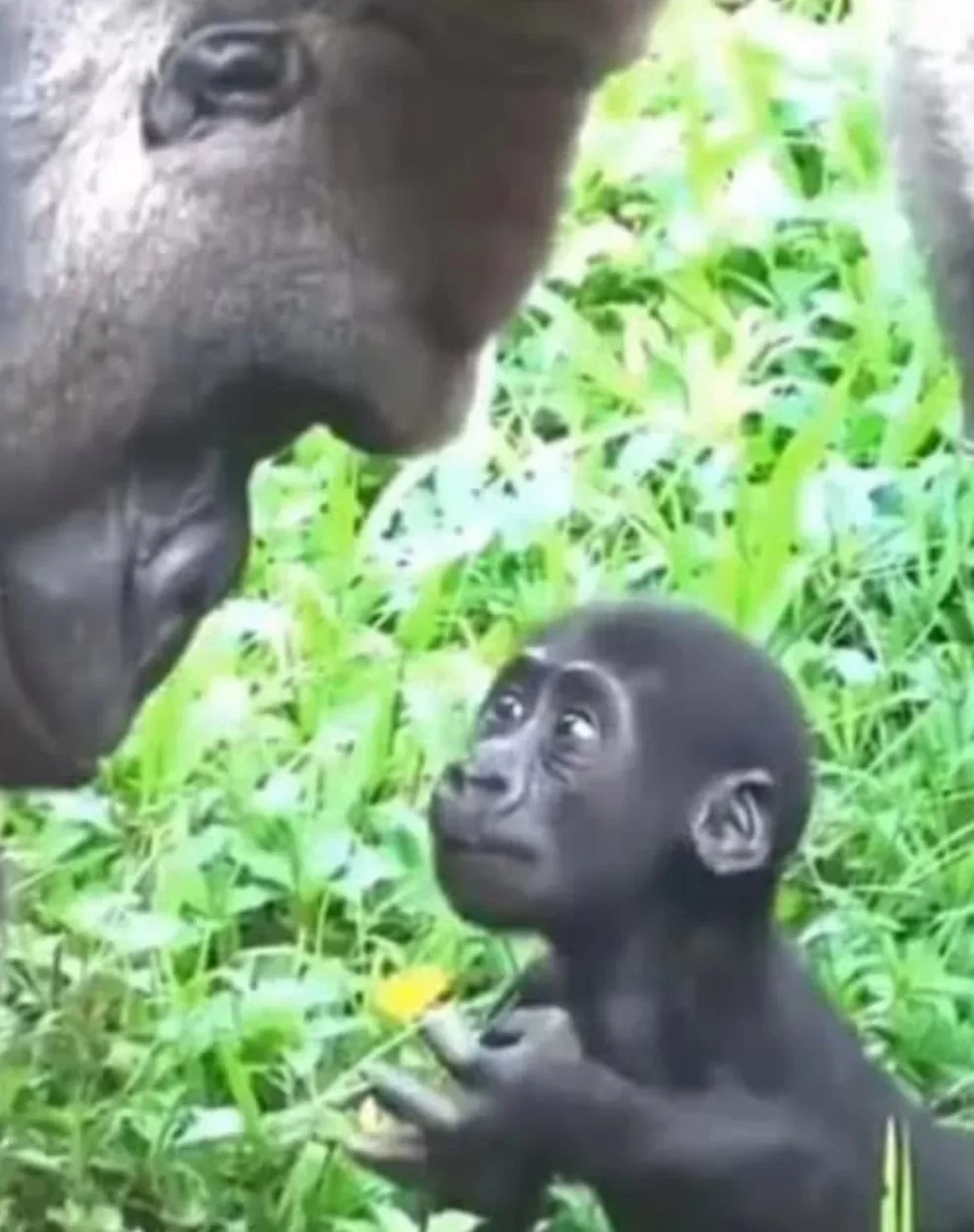

Baby Gorilla Meets His Father for the First Time: A Silent Moment of Recognition
In the calm morning light of a zoo enclosure, a powerful silverback gorilla sat quietly. His broad frame, marked by the silver hair along his back, reflected strength and authority. As the dominant male, he embodied protection and stability within his group.
Then something remarkable happened.
A baby gorilla slowly made its way toward him for the very first time.
The little one hesitated at first, moving cautiously across the ground. The size difference between them was striking. The silverback remained still, observing without any sign of agitation. The baby paused, then stretched out a tiny hand and gently touched the father’s face.
For a brief second, time seemed to slow.
The large male did not recoil. He did not assert dominance. Instead, he lowered his head slightly, allowing the infant to explore. There was no roaring, no threatening posture. Only quiet acknowledgment.
The short video, titled “Baby-Gorilla trifft zum ersten Mal seinen Vater,” quickly spread across social media platforms and touched millions of viewers. The emotional impact was immediate.
Why did such a simple moment resonate so deeply?
Perhaps because it challenges assumptions about strength and vulnerability. Silverbacks are often portrayed as fierce protectors, ready to defend their group at any moment. Their size, power, and imposing presence can appear intimidating. Yet in this encounter, strength manifested as patience.
In gorilla social structure, the silverback plays a central role. He protects the group from external threats and maintains order. While mothers provide primary care to infants, the presence of the dominant male creates a secure environment. His calm acceptance of the baby’s approach sends a powerful signal to the entire group.
The infant’s gesture was instinctive curiosity. The father’s response was controlled and measured. That interaction represents trust developing between generations.
Gorillas share many behavioral traits with humans, including complex social bonds and emotional expression. Observing such moments reminds viewers that connection does not require language. It relies on presence, proximity, and safety.
The baby’s small hand against the father’s face symbolizes more than curiosity. It reflects exploration without fear. The father’s stillness reflects assurance without intimidation.
Many viewers commented that the video moved them because it captured something universal. The need for closeness. The importance of gentle acknowledgment. The quiet recognition between parent and child.
In a world filled with noise and constant motion, this brief encounter stood out precisely because of its simplicity. There was no dramatic soundtrack. No elaborate action. Just a shared moment in morning light.
Love does not always appear in grand gestures. Sometimes it appears in restraint. In allowing space. In choosing calm over force.
The scene also highlights the significance of responsible wildlife care in zoological settings. When environments are structured to respect natural behaviors, such interactions can unfold organically. Observers are given a rare glimpse into intimate family dynamics that would otherwise remain unseen.
Ultimately, the power of the video lies in what it quietly communicates: love needs no words.
Only presence.
In that silent enclosure, beneath the watchful eyes of visitors and cameras, a father and child connected through a simple touch. And millions were reminded that tenderness can exist even within the strongest among us.


