

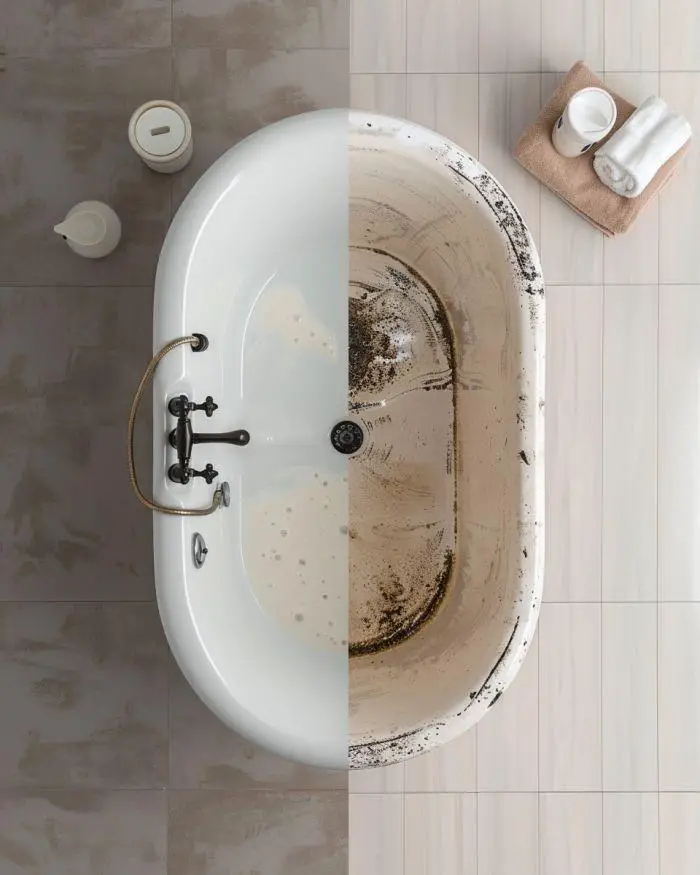

Keeping the bathtub sparkling clean can feel like an endless chore. Soap scum, hard water stains, and mildew seem to appear overnight, making cleaning feel like an exhausting, time-consuming task. But what if you could restore your tub’s shine in just two minutes, with almost zero effort?
This isn’t a gimmick—it’s an old-fashioned trick passed down by grandmothers for generations, and it truly works. Simple, effective, and inexpensive, this method requires no expensive products or endless scrubbing. Let’s break down how you can clean your bathtub quickly and effortlessly, using items you already have at home.
Why Bathtub Cleaning Feels So Daunting
Before we dive into the easy solution, it’s worth understanding why bathtubs get so dirty:
- Soap Scum Buildup: When soap mixes with hard water minerals, it leaves behind a filmy residue.
- Hard Water Stains: Minerals in hard water leave behind chalky white deposits that stick stubbornly to surfaces.
- Mold & Mildew: Bathrooms are naturally humid, providing the perfect environment for mold growth, especially in corners and around seals.
Traditional cleaning methods involve strong chemicals, abrasive scrubbers, and a lot of elbow grease. However, those solutions aren’t always safe or efficient.
The 2-Minute Cleaning Secret: What You’ll Need
The beauty of this hack lies in its simplicity. You’ll need:
- White Vinegar: A natural disinfectant that breaks down mineral deposits, soap scum, and mildew.
- Dish Soap: Especially effective at cutting grease and residue.
- Spray Bottle: For even, easy application.
- Sponge or Cleaning Cloth: Optional, but useful for wiping afterward.
Step-By-Step Guide to the Effortless Bathtub Clean
1. Prepare the Solution
In your spray bottle, mix equal parts white vinegar and dish soap. Shake gently to combine. The vinegar’s acidity dissolves grime and hard water stains, while the dish soap tackles greasy soap buildup.
2. Spray Generously
Spray the mixture liberally over the entire surface of your bathtub—sides, bottom, and especially around drains and corners. Don’t worry if it looks like a lot; you want full coverage.
3. Let It Sit
Here’s the trick: let the solution sit for 2 minutes. No scrubbing necessary! The vinegar and soap will do the work, breaking down the stains and grime without effort on your part.
4. Rinse
After the 2 minutes, simply rinse the tub with warm water. Use a sponge or cloth if you want to give it a quick wipe, but in most cases, the dirt and buildup will slide right off.
Why This Method Works So Well
- Vinegar’s Power: The acetic acid in vinegar dissolves mineral deposits and breaks down mildew.
- Dish Soap’s Grease-Cutting Action: Soap scum is essentially oily residue. Dish soap lifts it away easily.
- Time Efficiency: Allowing the solution to sit saves you scrubbing time, making this a true 2-minute trick.
Additional Benefits
- Eco-Friendly: No harsh chemicals or toxic fumes.
- Budget-Friendly: Both vinegar and dish soap are affordable and often already in your kitchen.
- Safe for Most Surfaces: Ideal for porcelain, enamel, acrylic, and fiberglass tubs.
Bonus Tips for Maintaining a Clean Tub
Once your bathtub is gleaming, keep it that way with these simple habits:
- Quick Rinse After Use: Run warm water for 30 seconds after every shower or bath to rinse away soap before it dries.
- Weekly Maintenance Spray: Keep a spray bottle of diluted vinegar handy and mist the tub once or twice a week.
- Ventilate Your Bathroom: Proper airflow reduces mold and mildew buildup.
- Dry Corners & Seals: Use a towel to wipe down areas prone to mold growth.
Can This Method Be Used on Shower Walls or Tiles?
Absolutely! The vinegar and dish soap combo works wonders on tile, grout, and glass shower doors. Just follow the same steps—spray, let sit, rinse—and watch soap scum and water stains disappear.
Caution: Avoid on Natural Stone
One important note: Do not use vinegar on marble, granite, or other natural stone surfaces, as the acidity can damage the finish.
Final Thoughts
If you’ve ever dreaded cleaning your bathtub, this simple trick may change your routine forever. No special cleaners, no back-breaking scrubbing—just two kitchen ingredients and two minutes of patience.
It’s one of those timeless, practical hacks passed down through generations for good reason. So next time your bathtub starts looking grimy, skip the heavy-duty cleaners and try grandma’s vinegar and soap method. You’ll be amazed at how fast and effective it is.


